
My father played two gigs in his life. He was great at both… Then he stopped performing.
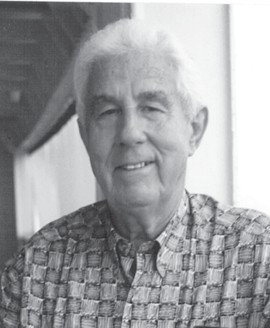
He taught me to play. He was a fine piano player, and a great dad.
He was also his own harshest critic — hard enough on his own playing that he wouldn't perform at all. That's where he stayed, for years.
I asked him about it when I was old enough to ask properly. He said he wasn't ready.
Years later I had more work than I could take, so I handed him two of the gigs I couldn't play.
He did both. He was great. Exactly as good as I knew he'd be.
He never took another one.
That's the part I still think about. It wasn't nerves and it wasn't ability — he'd just proved the ability, twice, in front of a room.
It was the standard he held himself to. He could always find something short of it.
So he went back to getting ready.
Ready was never coming. It isn't a level you reach quietly on your own.
You've probably had a version of that conversation with yourself.
Not in those words. It sounds more like: once this piece is clean. Once I stop fumbling that one bar. Once I know a few more tunes.
It's the same sentence every year. Only the ending changes.
I'm not going to tell you that time is running out, or that it gets harder every year you wait. I don't believe that, and you'd know I was selling you something.
I started teaching when I was fifteen. I'm fifty-three now.
Here's what I believe after all of that.
Nothing about waiting makes you more ready. Practicing in a loop, alone, with no order to it and no end in sight, does not slowly turn into readiness. It turns into another year of practicing in a loop.
Ready arrives when the work has a shape, and somebody who knows what they're listening to tells you that you're there.
My father had neither. Me handing him a gig twice isn't a plan, and it isn't the same as somebody telling him where his playing actually stood.
That's the whole thing I built this for.
Most people don't quit because it's hard. They quit because they can't decide.
I've watched it happen hundreds of times and it looks the same every time.
Somebody signs up somewhere, opens a library of a thousand lessons, and spends the first week trying to build themselves a curriculum.
They're not practicing. They're doing my job, badly, at eleven at night, with no way of knowing whether the order they've chosen is any good.
Three weeks of that and they stop. Then they call it a discipline problem.
It isn't. Nobody has the energy to design the plan and do the plan. Pick one.
You practice. I'll decide what comes next.
Four things do the work. Here they are before I explain them.
You practice. I decide what comes next, and I tell you where you actually stand. That is the whole promise, and these are the four parts that deliver it.
- 1
Premier Video Submissions
You send me a video. I watch it and write back.
- 2
Practice paths and focused practice actions
The order is decided for you, in pieces that finish.
- 3
Live training with me and Paul
Real classes on the calendar, with the ability to get feedback.
- 4
Intensives
Deep multi-week work on one subject, with assignments.
You send me a video. I tell you where you actually are.
Premier Video Submissions. Not a score from an algorithm listening through your laptop microphone — me, watching you play, writing back.
One at a time: you send a video, I respond, and then you can send the next one. That is deliberate — the point is to act on what I tell you before recording again. Ask and I’ll add lesson suggestions to the feedback, specific lessons to go to next, but only if you want them. My father never got this from anyone. It’s the single thing I’d have wanted for him.
There are three things I can say, and only three.
You can play this for people.
Not “nice job.” A judgment you can act on — go play it for somebody this month.
Close, and here’s the gap.
Named specifically, with the lessons that close it. Usually one or two things, not twenty.
Not yet, and that’s information too.
The honest verdict is the one that makes the other two mean something.
Premier members submit playing videos and get written feedback from me. Want lesson suggestions with it? Say so and I’ll pick out two or three to take you into whatever comes next.
He records short videos of the tricky parts.
The order is already decided. You just play.
Nine subjects, each at beginner and advanced — eighteen paths in all, 108 curated lessons put in the order they should be learned in.
Inside a path the unit is a practice action: one focused thing, five to ten minutes. Six of them finishes a track, and then it is done and you move on. That is the part that stops the loop — the work has an end you can actually reach.
You are never opening a library and building yourself a curriculum at eleven at night.
Not showing me what to practice, but how to practice.
Live classes with me and Paul. Not a library with nobody home.
The classes aren’t lectures you watch. You’re at the piano playing during them, and nobody sits waiting their turn while one person gets helped — everyone plays the whole time.
They are group classes — that is what is included with Premier. If you want one-to-one time with me, I sell private lessons separately, and I’d rather say that here than have you expect it as part of the membership.
PianoLab Live
Guided practice that gets you actively playing during class, not taking notes about playing.
The Confident Improviser Live
Focused improvisation training — guided practice and then putting it straight into a tune.
Friday Game Plan Live
Noon Eastern. One part of the Academy each week, shown properly, so you stop missing what you’re paying for.
Every replay
Premier class replays and the advanced training that comes out of them. Noon on a weekday doesn’t work for most people, and that’s fine.
Exactly what and how to practice to learn the new song.
Intensives, included.
An intensive is six weeks of structured work on one subject, with practice actions every week. Not a playlist — a course with a shape and an end, the way the Complete Programs are built.
They are part of your membership. Non-members buy them one at a time at $247 each; you get them because you are in Premier, along with everything else.
Cocktail Piano Intensive
6 weeks · includedChord voicings, melody harmonization and jazz substitutions — the polished sound of a real lounge pianist. 24 videos, 3h 56m, 18 practice actions.
Rock Piano Intensive
6 weeks · includedElton John’s “Guess That’s Why They Call It the Blues”, learned properly rather than simplified — the driving left hand and the feel that makes it sound like the record. 18 practice actions.
Blues Piano Intensive
6 weeks · includedC-Jam Blues with a real left-hand accompaniment, three scales for improvisation, turnarounds, coupling exercises and play/rest phrasing.
Latin Piano Intensive
6 weeks · includedBlue Bossa with rootless voicings, montunos, and building a Latin jazz solo that actually sits in the groove.
Every Complete Program is in Premier. Pick where you want to start.
The Complete Programs are the courses people used to buy one at a time. Premier members get all of them, from day one, whichever path they pick — and the path is only a starting point, so you're not staring at fifteen hundred lessons deciding.
Watch five minutes of the real thing first. These are unedited clips from inside the programs, not trailers.
You want it to sound like a record, not an exercise.
Starts with the thing nearly everyone skipped — the bass figure — and builds through turnarounds, slow blues feel and gospel voicings until you can sit down and play without first deciding what to play.
Play Blues Piano
Complete Program · includedThe form, the shuffle, the left hand. Start here even if you've played blues for years.
Blues Piano Intensive
Complete Program · includedTurnarounds, slow blues feel, gospel voicings. The moves that separate players from students.
Slow Blues Improvisation 1 & 2
Complete Program · includedWhere you stop playing the lesson and start playing something of your own.
Blues Practice Path
Beginner + AdvancedSix practice actions per track, five to ten minutes each. Finish six and the track is done.
You know the chords. You don't know what to play over them.
Closes the gap between theory you can recite and lines you can actually play — voicings that sound like something, bebop scales in context, standards you finish instead of abandon.
Jazz Piano Theory
Complete Program · includedThe harmony behind the sound, taught so it reaches your hands and not just your notebook.
Chord Shell Mastery™
Complete Program · includedThe voicing system underneath everything else. Students tell me this is the one that clicked.
Jazz Piano Improvisation 1 & 2
Complete Program · includedFrom your first deliberate phrase to soloing over a full tune.
Jazz & Improvisation Paths
Beginner + AdvancedFour tracks, each one ending in a certificate with my signature on it.
You want to sit down anywhere and play for an hour.
Repertoire and filling space — arrangements that hold up in a room, patterns you can put under any tune, and enough of them that you never run out halfway through the evening.
Cocktail Piano Lessons
Complete Program · includedThe accompaniment patterns, the intros, the endings. The working vocabulary.
Cocktail Piano Intensive 2026
Complete Program · includedFull arrangements, start to finish, at a standard you'd play in front of people.
Playing in Every Key
Complete Program · includedBecause the singer will ask, and "I only know it in C" is not an answer.
Harmony & Repertoire Paths
Beginner + AdvancedSongs you can play front to back, tracked so you know which ones are still solid.
Every style, not only the one you start with.
Picking a path decides where you begin. It does not fence off the rest — your membership opens the whole library from day one, and it is far wider than the three starting points above.
- 400+ Jazz lessons
- 200+ Blues lessons
- 100+ Cocktail lessons
- 100+ Rock lessons
- 60+ Funk lessons
- 45+ Latin lessons
- 35+ Gospel lessons
Styles overlap — plenty of lessons are two of these at once, so these are not figures to add up. Alongside them, improvisation, harmony and chords, technique, rhythm and feel, and piano foundations each run as their own practice path, at beginner and advanced.
Everything here has an end.
Most piano platforms are infinite on purpose. Infinite is comfortable, and comfortable is where my father stayed.
This one is built to be finished.
Then it's done
Six practice actions completes a track. You get a certificate and a badge, and you move on.
Paths with ends
Nine subjects at beginner and advanced. 108 curated lessons, in order.
Tracked targets
41 curriculum levels across all 12 keys, each one marked off individually.
Friday Game Plan
Live with me Fridays at noon Eastern, plus every replay.
Your practice record
Sessions, minutes, streaks, monthly recaps — including the months you were down on the one before.
Lessons
The whole library, every Complete Program included, whichever path you picked.
Limited-Time Bonus — Ends Tuesday, September 22
This is a special bonus, not part of the regular Premier annual membership. It ends Tuesday, September 22 at 11:59pm ET.
And one course becomes permanently yours.
Join Premier annual during this window and one complete program — a $247 value — stays in your account permanently, even after you cancel. It unlocks on day 31.
Pick any one of these four. Monthly members have access to all of them while they’re subscribed. Annual members have access to all of them and keep one no matter what happens next.
Your keep-forever course unlocks on day 31, once the 30-day refund window has closed.
You don’t have to remember — I’ll email you when it’s time to pick.
Before then you can change your mind and get every dollar back — email support and we take care of it.
The annual renews yearly. Cancel any time and the course you picked is still yours.
Included With Every Annual Membership
Personalized Practice Plan™
Twenty minutes, one to one with me, working out exactly what you should be practicing — a $49 value, included free with the year.
One per annual membership. Book it within your first 90 days. The call is recorded and the replay is saved to your account, so you can go back to it whenever you need to.
That's the whole arithmetic. No order bump, no second page, no upsell after checkout.
- 1 You join, and you are in. Access to everything is immediate — the whole library, the live classes, the paths, the practice tools. Nothing is drip-fed.
- 2 Book your Personalized Practice Plan™ within the first 90 days. Twenty minutes with me to work out what you should actually be practicing. The replay is saved to your account afterwards.
- 3 On day 31, your bonus course unlocks. Pick any one of the four and download it — it is yours to keep for good. I’ll email you when it’s time.
Don't join if
You can't find 20 minutes most days. Nothing here fixes that, and I'd rather you kept the money.
You've never touched a piano. Start with the free 30-Day Piano Playbook and come back in a month.
You want somebody watching you play every week. That's a private lesson, and I sell those separately.
You're shopping for a library to browse. This is a curriculum, and browsing is the thing it's designed to stop.
Do I have to send a video?
No. Plenty of members never do. But it's there when you want a straight answer about where you stand, and it's the reason most people join.
Can I switch paths later?
You're not locked in. Everything's included from day one.
When do I pick my keep-forever course?
Any time after your first 30 days. No rush — watch everything first and tell me when you know.
What’s the refund policy?
Thirty days from your first payment, for first-time members. One refund per customer, on your first membership only — if you’ve been a member before, even years ago, a new membership isn’t eligible. Renewals aren’t refundable; canceling stops the next one. Email support@jazzedge.com and we handle it. The full terms are here.
Is there a payment plan?
No. If annual isn’t right, go monthly at $59 — same access to everything, but not the keep-forever course. That bonus is what the annual adds.
How long have you been doing this?
I started teaching at fifteen and I’m fifty-three now, so thirty-eight years. Online since 2000.