

Jazz piano chord shells are one of the most important left-hand tools you can learn as a jazz pianist. If you’ve ever wondered how great players move smoothly through changes, chord shells are the foundation.
Shell voicings are one of the most essential left-hand tools in jazz piano. They simplify your playing, clean up your sound, and create the harmonic foundation for bass lines, comping, and advanced rootless voicings.
In this guide, you’ll learn what chord shells are, why every serious jazz pianist uses them, and how to start practicing them correctly.
A chord shell is the stripped-down framework of a chord. Instead of playing a full four-note voicing, you play just two essential tones in your left hand:
These two notes clearly define the harmonic function of the chord. The 3rd determines whether the chord is major or minor. The 7th determines whether it’s dominant or minor. Together with the root, they outline the chord without cluttering your sound.
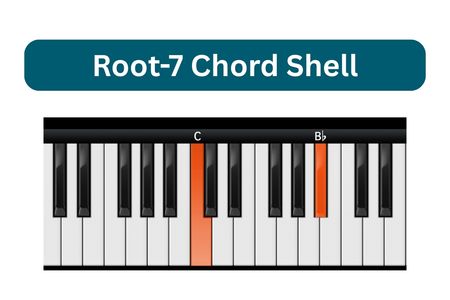
The Root–7 shell is extremely common in jazz piano comping. It works beautifully on dominant 7th chords and minor 7th chords. Because the 7th defines the tension and character of the harmony, this voicing creates a strong, clear foundation.
This shell is especially effective at faster tempos because it is easy to grab and keeps your left hand stable.
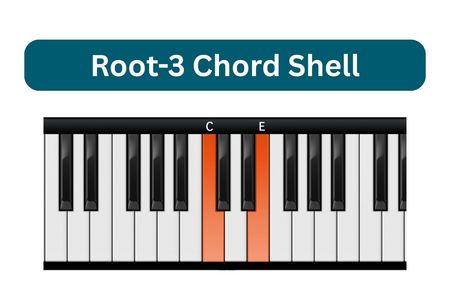
The Root–3 shell is powerful because the 3rd clearly defines whether the chord is major or minor. When you use this voicing, the harmony becomes unmistakable, even though you’re only playing two notes.
Alternating between R7 and R3 shells creates variety while keeping your left hand simple and controlled.
If you listen carefully to great jazz pianists, you’ll hear shell voicings constantly. Here’s why they rely on them:
Want to see these concepts demonstrated at the piano?
Watch the full lesson here:
5 Reasons Every Jazz Pianist Uses Shell Voicings
Chord shells aren’t just static shapes. You can break them apart rhythmically to create movement.
Instead of playing the shell as a block chord, try alternating:
This creates a strong quarter-note pulse and can simulate a walking bass line feel while clearly outlining the harmony.
If shell voicings still feel inconsistent or slow, you don’t need more scattered theory. You need structured repetition and guided practice.
The Chord Shell Mastery Program is designed to make shells automatic in your playing. Inside, you’ll get:
If you’re serious about strengthening your left hand and building a solid jazz foundation, this is your next step.
Learn more about the Chord Shell Mastery Program here →
Master the shells. Everything else becomes easier.
